


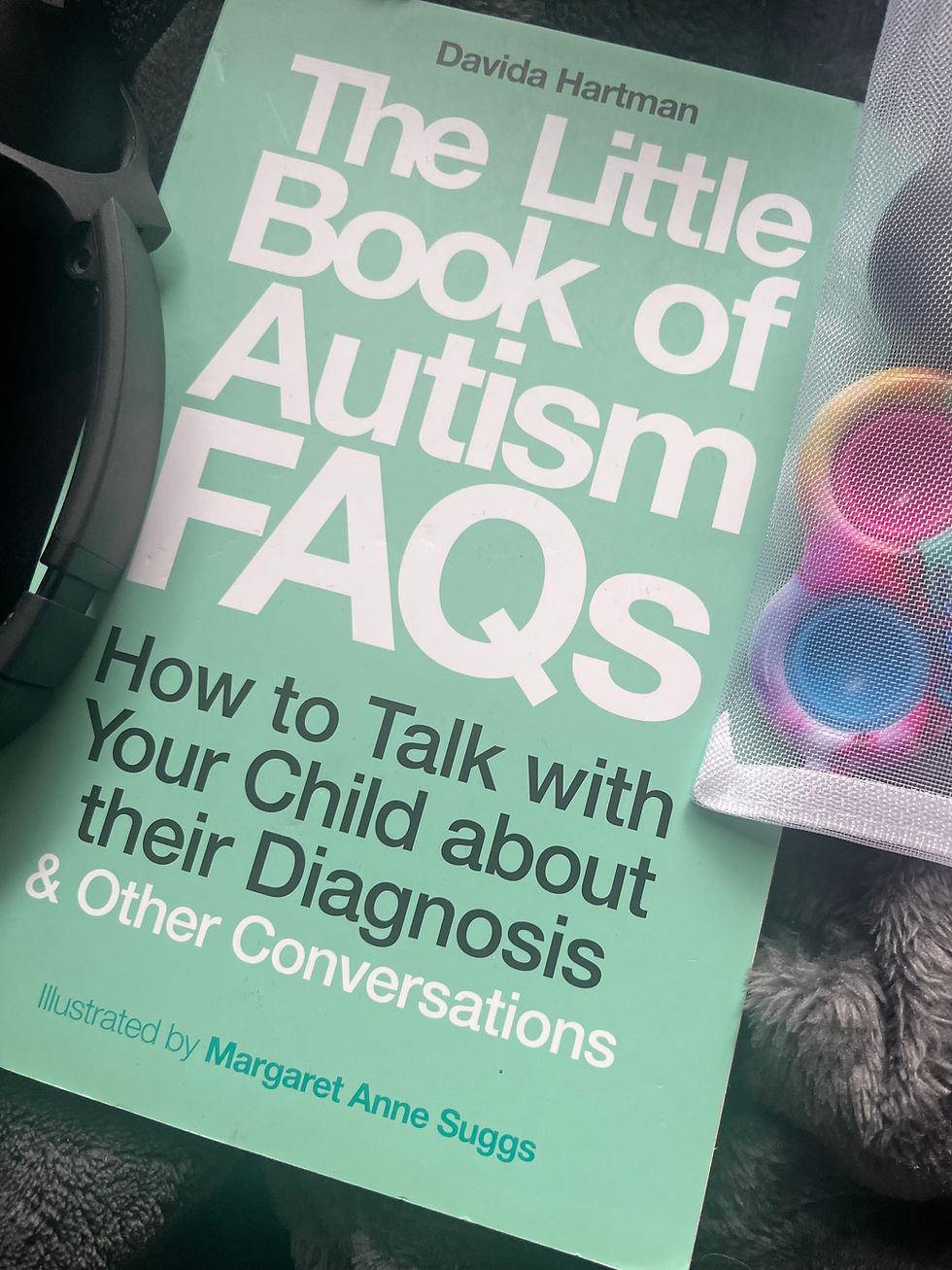
The Little Book of Autism FAQs

The Little Book of Autism FAQs is a warm and accessible resource for parents beginning conversations with their autistic child about autism. I particularly liked the format, with each question offering a short answer followed by a longer explanation. It makes the book easy to navigate and means readers can choose how much information they want to take in at the time.
I also appreciated the book’s encouragement of open and positive conversations about being autistic. It supports parents to talk with their child rather than treating autism as something that should be hidden or spoken about negatively. The inclusion of autistic perspectives alongside professional knowledge is another strength, recognising the importance of autistic voices in conversations about autism and autistic identity.
As the book was published in 2019, some of the language and ideas feel a little dated now. Our understanding of autism has continued to develop, particularly through autistic-led research, advocacy and writing. I found myself wanting more nuance around disability, support needs and the diversity of autistic experiences, although this doesn’t take away from the many strengths of the book.
What I enjoyed most was how approachable the book feels. It doesn’t require parents to have a detailed understanding of autism before starting these conversations, and the format makes it something they can return to as new questions arise. I think it would be a helpful resource for families at the beginning of their journey, particularly alongside more recent autistic-led perspectives.
Found here: https://link.amazon/B09U45u7H


Comments